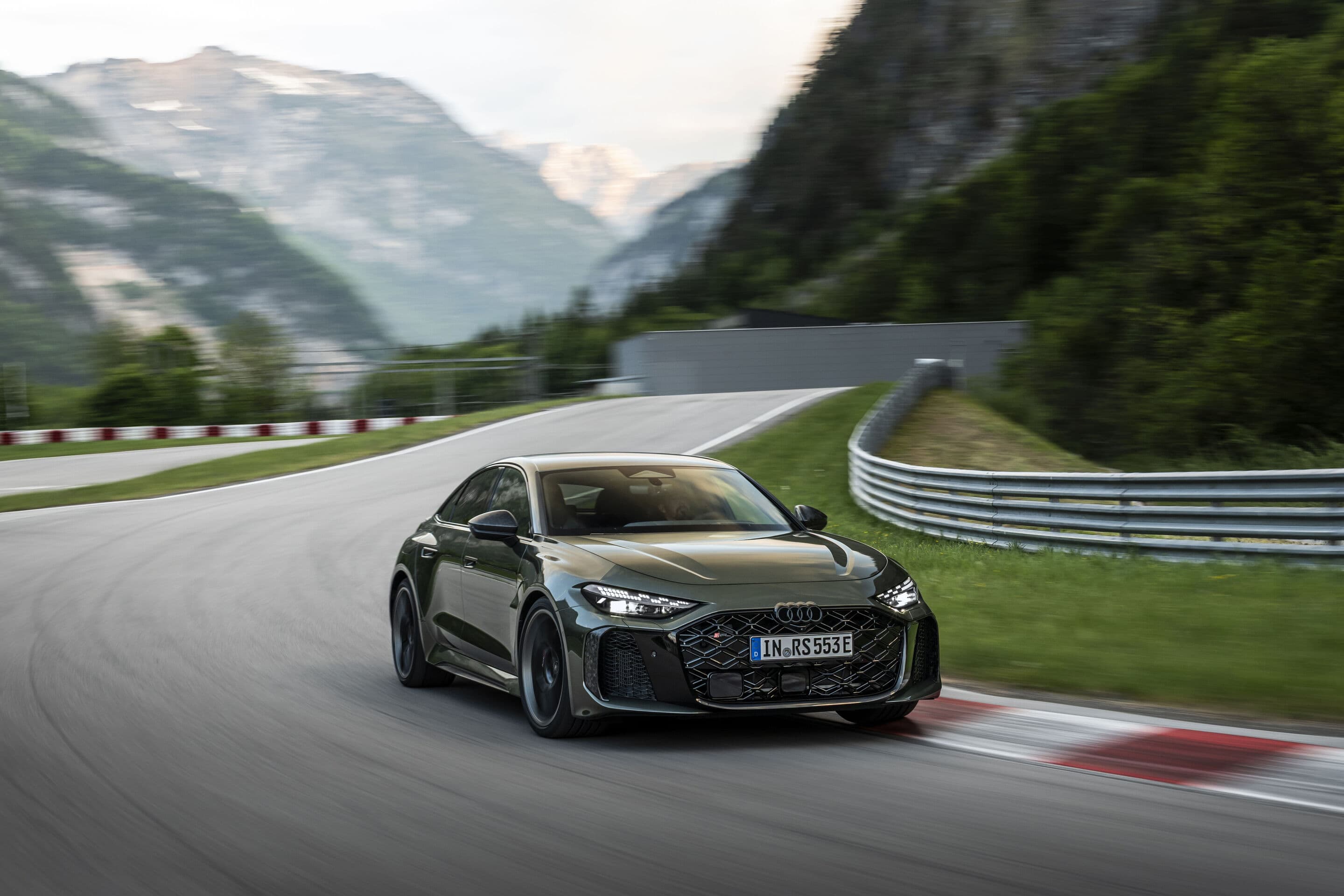
The car that refuses to pick a side
For a decade the German performance-sedan war has run on a fixed assumption. A real driver's car drinks fuel, a real driver's car makes noise, and if you want efficiency you go buy a Prius. BMW kept the M3's straight-six honest. Mercedes-AMG tried to electrify with the C 63's four-cylinder PHEV and got buried under a wave of customer revolt. Audi watched both and quietly came back with a third answer.
The 2027 RS 5 is the first car in the segment to refuse the trade-off. It hits 100 km/h in 3.6 seconds, makes 630 hp, sounds like a proper RS car, and will still run the school run as a silent EV with 84 km of range. The competition isn't beaten on their terms. They're outflanked.
The C 63 is technically a PHEV. The RS 5 is actually one.
The efficiency play is real this time
This is the headline, and it deserves the table treatment. The RS 5 pairs a 2.9-litre twin-turbo V6 with an electric motor for 630 hp / 609 lb-ft combined. Battery is 25.9 kWh gross / 22 kWh usable, which is small for a dedicated EV but large for a performance PHEV. The WLTP electric-only range is 84 km (52 mi), with charge-depleting combined consumption rated at 3.8–4.3 L/100km.
| Electric range | Real-world fuel use | Character | |
|---|---|---|---|
| Audi RS 5 (2027) | ~84 km WLTP | 3.8–4.3 L/100km (charged) | True daily EV usability |
| Mercedes-AMG C 63 S E-Performance | ~13 km (1 mi EPA) | 12+ L/100km observed | PHEV in name only |
| BMW M3 Competition | None (pure ICE) | 9.8–10 L/100km | Last of the analogue performance sedans |
The point isn't that the RS 5 is the most efficient performance sedan. That bar is low and meaningless. The point is that it's the only one of the three you can credibly run as a zero-fuel commuter car on weekdays and still pull 3.6-second runs on weekends. The C 63's tiny battery makes its plug-in claim almost cosmetic. Real-world testing routinely sees it consume more fuel than the pure-petrol M3 because the cell depletes inside a single hard lap.
Chassis tech that finally moves the segment
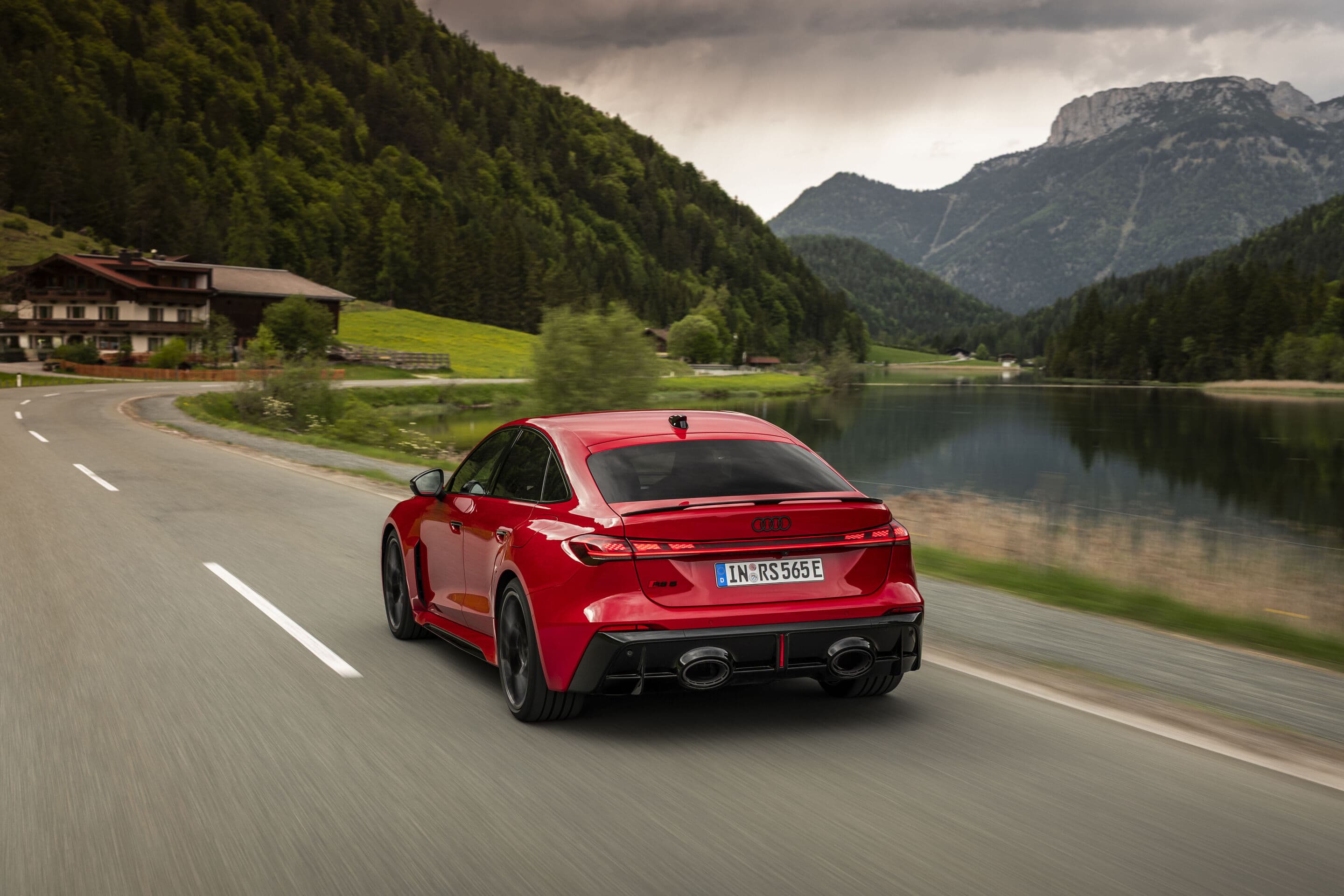
The RS 5 introduces electro-mechanical torque vectoring at the rear axle. It's the first large-scale deployment of the tech in the class. Unlike a mechanical clutch-pack differential, the electronic system reacts faster and distributes power side-to-side with more precision. It can also shift torque even when you're off the throttle, which matters. Fewer wearing parts, more headroom for software calibration over the car's life.
The payoff shows up in the way it changes direction. Curb weight is on the wrong side of 5,100 lb (around 2,300 kg), and that's the battery talking, but the chassis tech largely disguises it. Testers note it transitions "like a lighter car would," responding cleanly to throttle, steering, and brake inputs in a way the weight figure suggests shouldn't be possible. It's not light. It just doesn't drive heavy.
The sound problem, and who solved it
This is where the RS 5 separates itself from Mercedes most decisively, and it's worth dwelling on because it's where rivals have lost most of their cultural ground over the last three years.
The RS 5 sounds like a real performance car. Reviewers consistently praise the optional RS Sport exhaust system: a sharp bark on lift, an honest overrun, a "gritty growl" as the valves dump open. The note comes from the exhaust. Not from a speaker. Not from a digital signal processor pretending to be combustion.
The CLE 53, its closest Mercedes coupe analogue, does not. The owner and reviewer consensus is damning:
- Downshifts produce a low-frequency thud, not a crack. No proper pops and bangs.
- The note sounds muffled, as if coming from under the floorpan rather than out the back.
- Mercedes pipes synthetic "AMG Real Performance Sound" through the cabin speakers to fill the gap, which is almost universally criticised as fake.
- The 3.0L straight-six underneath should sound great. Mercedes engineered the character out of it.
The RS 5 didn't have to do anything special to win this fight. It just had to keep the exhaust loud enough to be heard. That it managed that on a 2,300 kg PHEV is the real engineering trick.
The looks finally match the substance
The previous RS 5 had one flaw the engineers couldn't fix: it looked too much like an S5, which looked too much like an A5. The 2027 car finally separates the breeds. Almost every body panel is unique to the RS 5, and only the hood is shared with lesser variants. The fenders are flared over a widened track, the grille is blacked out, the intakes are aggressive, and the stance is unmistakably wide-body.
The styling isn't universally loved. The oversized exhaust tips at the back drew the predictable internet mockery. They're large, and the photography shows it. In person, on a moving car, with the rest of the bodywork around them, the proportions work. On a static rear-three-quarter screenshot, they're loud. Your mileage may vary.
Why a buyer chooses it over the M3 and the C 63
- You want one car that does everything. Quiet EV commute on Monday. 630 hp weapon on Saturday. No rival in the segment offers both. Only the RS 5.
- You refuse to choose between efficiency and emotion. The RS 5 is the first in class to refuse the compromise outright. Charge it overnight and your daily fuel bill can drop to near zero.
- You care how it sounds. The RS 5 has a real exhaust note. The CLE 53's is synthesised. The C 63's is a four-cylinder. The M3's six is still excellent, and it's the only thing the M3 has that the RS 5 doesn't.
- Chassis tech matters to you. Electronic torque vectoring is a genuine step forward in agility for a car this heavy. It's the engineering story of the year in this segment.
- Running costs. Charge at home, commute on the battery, only burn fuel when you want to. The math gets uncomfortable for an M3 buyer the moment you do it honestly.
Where it falls short
We're not pretending this car is perfect.
- Weight. 5,100+ lb is a significant penalty. M3 purists will note theirs is lighter and more traditionally engaging. They aren't wrong.
- Steering. Reviewers flag the rack as a bit numb, though this is an industry-wide complaint, not unique to Audi. It's the price of EPS calibration tuned for ADAS.
- Styling is divisive. The exhaust tips and front fascia split opinion. Configure carefully.
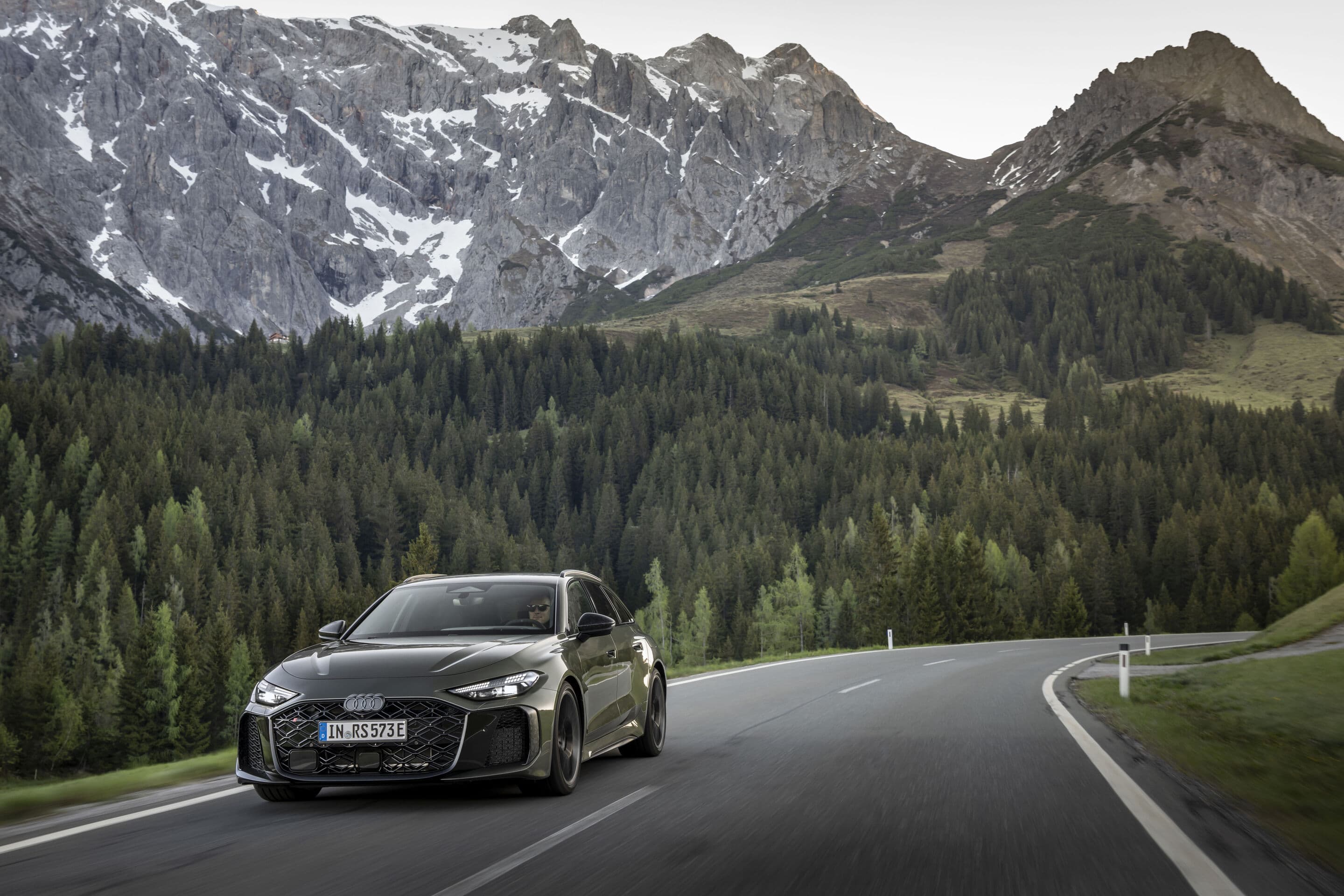
- The Avant isn't coming to the US. The wagon is the most charismatic RS 5 in the lineup, and North American buyers don't get it. Again. The Sedan is the consolation prize.
- The M3's straight-six. If the only thing you care about is analogue purity and you don't give a damn about electrification, the M3 is still the answer. It's a smaller pool of buyers than it used to be, but they exist, and they're right about what they want.
Key specs (for the record)
| RS 5 Sedan | |
|---|---|
| Powertrain | 2.9L twin-turbo V6 + electric motor (PHEV) |
| Output | 630 hp / 609 lb-ft combined |
| 0–100 km/h | 3.6 s |
| Top speed | 285 km/h (electronically limited) |
| Battery | 25.9 kWh gross / 22 kWh usable |
| EV range (WLTP) | ~84 km (52 mi) |
| Consumption (charged) | 3.8–4.3 L/100km |
| Curb weight | ~2,300 kg / 5,071 lb |
| Drivetrain | quattro AWD with electronic rear torque vectoring |
| Transmission | 8-speed tiptronic |
| Availability | Europe now; North America late 2026 / early 2027 (Sedan only) |
The verdict
The RS 5 doesn't win on lap times, since the M3 still has it on weight. It doesn't win on heritage, since the C 63 nameplate runs deeper. It wins on the answer it gives the question nobody else in the segment is willing to answer honestly. Which is: can a 2026 performance sedan be a serious driver's car and an everyday EV without faking either job?
For the first time, the answer is yes. And the company that did it isn't BMW, and it isn't Mercedes.
See how it compares head-to-head in our Audi A5 vs BMW M3 breakdown, or where it ranks on our fastest cars list.
The 2027 RS 5 is on sale in Europe now. North American deliveries are expected late 2026 / early 2027 as a 2027 model. Avant configuration is confirmed not coming to the US. Final EPA figures and Audi USA pricing pending, so verify before ordering. We will update this review at launch.
***
Sources: The new Audi RS 5: high performance in a hybrid (Audi). Photography: Audi.